Load Pin Selection
Load Pins are used for accurate load and force measurement in a wide range of industrial applications, including environments where combustible gases or liquids may be present. In these settings, load measurement equipment must be carefully selected with the surrounding environment in mind.
Hazardous environments are common in oil & gas, refining, chemical processing, offshore operations, and other industrial facilities where explosive atmospheres may exist. Load Pins provide a way to measure force or load directly at critical points within cranes, winches, lifting equipment, and other machinery operating in these demanding environments.
Hazardous Load Pin Applications
Load Pins can be incorporated into a variety of load measurement systems where conventional load cells may not be practical. In hazardous environments, they can provide force measurement at sheaves, shackles, clevises, pulley assemblies, lifting points, and other load-bearing connections while integrating with the instrumentation used to monitor and control the equipment.
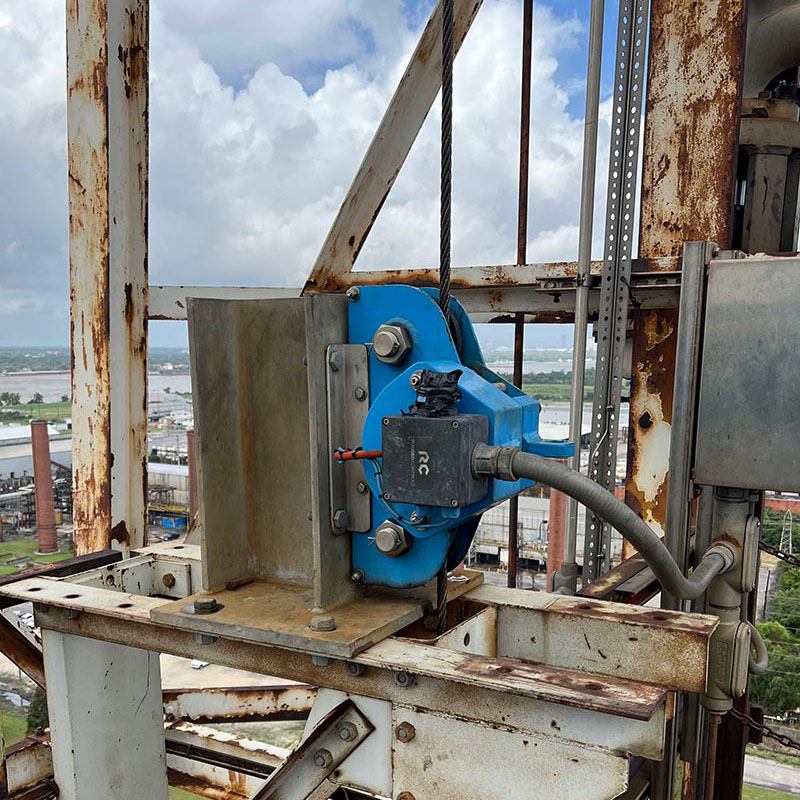
In the oil & gas industry, Load Pins can be used on cranes and winches for monitoring suspended loads, line tension, and lifting operations around drilling and production equipment. Offshore cranes, for example, may use Load Pins at sheaves or other load-bearing points to measure the force carried by a wire rope during lifting operations. Winch systems can also incorporate Load Pins to monitor line tension during pulling, lifting, or deployment operations.
Refineries and chemical facilities present another common application. Cranes, hoists, and material-handling equipment may operate in areas where flammable gases or vapors may exist. Load Pins can be integrated into these systems to monitor lifting loads and provide operators with information about the forces being applied to equipment.
Understanding Hazardous Location Standards
The specific requirements for Load Pins and other electrical equipment depend on where and how the equipment will be used. In North America, hazardous locations involving flammable gases and vapors are commonly identified as Class I, with Class I, Division 1 (C1D1) and Class I, Division 2 (C1D2) being two classifications frequently encountered in industrial applications.
Internationally, equipment intended for potentially explosive atmospheres may be subject to ATEX requirements in Europe or IECEx certification for international applications. While these systems use different classification and certification frameworks, they address the same fundamental consideration of ensuring equipment is suitable for its intended hazardous environment.
When specifying a Load Pin for a hazardous location, it is important to identify the applicable classification or certification requirements before selecting the equipment. The Load Pin should also be considered as part of the complete measurement system, including wiring, signal conditioning, and connected instrumentation.
Key Takeaways
For applications involving hazardous environments, selecting the right Load Pin requires more than simply matching the required load capacity. The environmental conditions, installation, surrounding equipment, and applicable certification requirements should all be considered to ensure the resulting load measurement system is appropriate for the application.
To get a Load Pin quote for your specific needs, visit our Load Pin Request Form.